





















Introduction
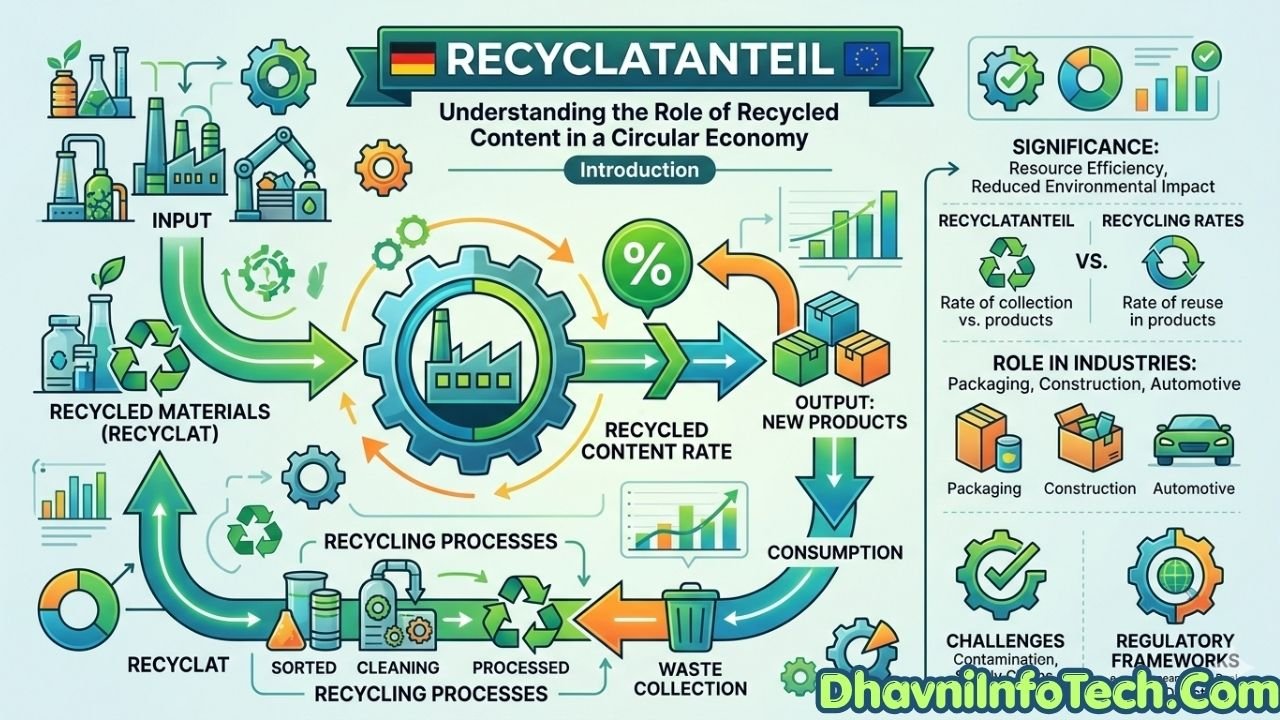
In recent years, sustainability, circular economy, and resource efficiency have become central topics in global environmental discussions. One term that appears increasingly often in these debates — especially in German-speaking countries and European policy frameworks — is recyclatanteil. While it may sound technical, the concept behind recyclatanteil plays a crucial role in determining how sustainable modern production systems really are. It reflects not only how much waste is recycled, but more importantly, how much recycled material is actually used again in new products.
This article provides an in-depth explanation of recyclatanteil, its significance, how it differs from recycling rates, its role in various industries, current challenges, regulatory frameworks, and its future relevance in the transition to a circular economy.
What Is Recyclatanteil?
At its core, recyclatanteil refers to the proportion of recycled material — also known as recyclate — used in the production of a new product or material. Expressed as a percentage, it answers a straightforward but important question: out of all the raw materials used to manufacture a product, how much of it came from previously recycled sources?
For example, if a plastic bottle is manufactured using 30% material recovered from post-consumer plastic waste, its recyclatanteil is 30%. The remaining 70% would consist of virgin, or newly extracted, raw material.
This distinction matters greatly. A high recyclatanteil signals that a product or manufacturer is actively closing the material loop — reducing dependence on finite natural resources and giving waste a second life. It is not just an environmental metric; it has become a marker of genuine commitment to sustainable production.
Recyclatanteil vs. Recycling Rate: A Crucial Difference
Many people confuse recyclatanteil with the recycling rate, but the two measure entirely different things, and conflating them can paint a misleading picture of how circular an economy actually is.
The recycling rate measures how much of a given material or product stream is collected and sent for recycling. A country might report a recycling rate of 60% for plastic packaging, meaning 60% of discarded plastics are collected and processed through recycling facilities.
The recyclatanteil, on the other hand, measures the demand side of the equation — how much recycled material is actually purchased and incorporated into new products. A high recycling rate means little if the resulting recyclate sits unused in warehouses because manufacturers prefer cheaper virgin materials.
This gap between supply and demand of recycled content is one of the most persistent challenges in the global push for circular production. Addressing this gap is precisely why the concept of recyclatanteil has gained so much attention among policymakers, industry leaders, and environmental advocates.
Why Recyclatanteil Matters for the Environment
The environmental case for increasing recyclatanteil across industries is compelling. When manufacturers integrate higher proportions of recycled content into their production processes, several meaningful environmental benefits follow.
Reducing Raw Material Extraction
Every percentage point increase in recyclatanteil translates to a reduction in the demand for virgin raw materials. Whether it’s bauxite for aluminum, crude oil for plastics, or timber for paper products, extracting these materials from the earth involves significant energy use, land disruption, water consumption, and carbon emissions. Using recycled material in their place alleviates pressure on natural ecosystems.
Lowering Carbon Emissions
Producing goods from recycled materials typically requires far less energy than starting from scratch with virgin inputs. Aluminum produced from recycled scrap, for instance, uses roughly 95% less energy than aluminum smelted from raw bauxite ore. When recyclatanteil increases across a product category, the cumulative carbon savings can be substantial.
Keeping Materials in the Loop
One of the foundational principles of the circular economy is that materials should stay in productive use for as long as possible. A high recyclatanteil ensures that the investment of energy and resources that went into creating a material in the first place is not wasted after a single use cycle. It keeps materials in the loop — moving from product to collection, to processing, and back into production.
Recyclatanteil Across Industries
The relevance and measurement of recyclatanteil varies significantly across different sectors. Here’s how it shows up in some of the most material-intensive industries.
Plastics and Packaging
This is arguably the sector where recyclatanteil has attracted the most policy attention. The packaging industry consumes enormous volumes of plastic, much of it used only once before disposal. European regulations have set concrete targets for recyclatanteil in plastic packaging, requiring that a minimum percentage of recycled plastic content be used in specific product categories.
Manufacturers are under increasing pressure to not only collect plastic waste but to actively source and use recycled plastic — known as rPET, rHDPE, or other recycled polymer grades — in their products. Consumer brands in the food and beverage sector, in particular, have begun advertising the recyclatanteil of their bottles and containers as a key sustainability credential.
Construction and Building Materials
The construction sector is one of the largest consumers of raw materials globally. Here, recyclatanteil applies to materials like steel, concrete aggregates, insulation products, and wood composites. Recycled steel, for example, made from scrap metal in electric arc furnaces, already accounts for a significant share of global steel production. Increasing the recyclatanteil in construction materials not only reduces environmental impact but also supports the development of markets for demolition waste.
Textiles and Fashion
The fashion industry has come under intense scrutiny for its environmental footprint. In response, many brands have begun reporting on the recyclatanteil of their garments — particularly for synthetic fabrics like polyester, which can be produced from recycled PET bottles or old garments. While progress has been made, challenges around fiber quality degradation and sorting technology continue to limit how high recyclatanteil can realistically climb in this sector.
Electronics and Automotive
Electronics and automobiles both contain a complex mix of metals, plastics, and composites. Increasing recyclatanteil in these sectors is technically demanding but environmentally critical, given the toxic substances and rare earth elements involved. The automotive industry, particularly as it transitions to electric vehicles, faces growing expectations to increase the recyclatanteil of battery materials such as lithium, cobalt, and nickel.
Regulatory Frameworks Driving Recyclatanteil
The regulatory landscape around recyclatanteil has evolved rapidly, especially in Europe. Several key frameworks are shaping how manufacturers approach and report recycled content.
EU Packaging and Packaging Waste Regulation
The European Union’s revised Packaging and Packaging Waste Regulation introduces mandatory minimum recyclatanteil requirements for plastic packaging placed on the EU market. These requirements vary by material type and packaging application, and they are set to increase over time, pushing manufacturers to steadily raise their recycled content usage.
EU Green Deal and Circular Economy Action Plan
The broader European Green Deal, along with its Circular Economy Action Plan, positions recyclatanteil as a key lever for decoupling economic growth from resource consumption. The plan calls for product design standards that make it easier to use recycled content without compromising product quality or safety.
Extended Producer Responsibility (EPR)
Extended Producer Responsibility schemes, which require manufacturers and importers to take financial or physical responsibility for the end-of-life management of their products, increasingly include incentives tied to recyclatanteil. Companies that use higher proportions of recycled content may benefit from reduced EPR fees or public recognition, creating a direct financial motivation to improve their numbers.
Challenges in Increasing Recyclatanteil
Despite growing regulatory pressure and genuine environmental motivation, several structural barriers make it difficult for many industries to rapidly increase recyclatanteil.
Quality and Contamination Issues
Recycled materials are not always consistent in quality. Post-consumer plastics, for example, may contain residues, colorants, or mixed polymer types that make them unsuitable for certain applications without expensive additional processing. When the quality of recyclate cannot be guaranteed, manufacturers are often reluctant to substitute it for virgin material, especially in safety-critical or food-contact applications.
Price Volatility of Recyclate
The market price of recycled materials can be highly volatile, often making virgin materials the cheaper and more predictable option. When oil prices fall, for instance, virgin plastic becomes less expensive to produce, undercutting the economic case for using recycled alternatives. Without stable price signals or policy mechanisms, industry uptake of recyclate remains inconsistent.
Limited Infrastructure
In many regions, the infrastructure for sorting, cleaning, and processing recyclate to a commercially usable standard is still underdeveloped. Even where waste collection is strong, the technical capacity to convert that collected waste into high-quality secondary raw material — and then match it with industrial buyers — is frequently a bottleneck.
Lack of Standardized Measurement
One significant challenge for recyclatanteil as a metric is the lack of a universally agreed-upon method for measuring and verifying it. Different industries, certification bodies, and national regulators use varying definitions and verification approaches, making it difficult to compare claims across borders or supply chains. This inconsistency also opens the door to greenwashing.
How Is Recyclatanteil Measured and Verified?
Several methodologies exist for calculating and verifying recyclatanteil, each with its own trade-offs.
Mass Balance Approach: This method tracks the total weight of recycled input against the total weight of product output. It is practical and widely used but does not guarantee that any specific unit of product physically contains recycled material — rather, the average across a production batch is claimed.
Physical Segregation: This approach requires that recycled material be kept physically separate throughout the production process, ensuring that every unit of product genuinely contains recycled content. It is more robust but also more operationally complex and costly.
Certification Schemes: Third-party certification bodies, such as ISCC PLUS, Recycled Claim Standard (RCS), or the Global Recycled Standard (GRS), offer audited verification of recyclatanteil claims. These certifications are increasingly expected by retailers and brand owners who want credible sustainability credentials throughout their supply chains.
The Business Case for Higher Recyclatanteil
Beyond regulatory compliance, there is a growing business case for companies to voluntarily increase their recyclatanteil.
Consumer awareness around product sustainability has risen sharply. Shoppers — particularly younger demographics — actively look for products that demonstrate environmental responsibility, and transparent recyclatanteil reporting has become one way brands communicate this. Companies that lead on recycled content can differentiate themselves, earn loyalty, and attract ESG-conscious investors.
At the same time, increasing recyclatanteil helps companies reduce their exposure to raw material price shocks and supply chain disruptions linked to virgin resource extraction. Building relationships with recyclate suppliers diversifies sourcing and can improve supply chain resilience over the long term.
Future Outlook: Recyclatanteil in the Circular Economy
Looking ahead, the importance of recyclatanteil is only set to grow. As Europe and other regions push forward with mandatory recycled content requirements, and as global sustainability reporting frameworks become more standardized, recyclatanteil will increasingly function as a core performance indicator for companies across manufacturing, retail, and logistics.
Technological advances in chemical recycling — which can convert complex or contaminated plastic waste back into virgin-equivalent feedstocks — offer the prospect of expanding the range of materials eligible for high recyclatanteil claims. Meanwhile, digital product passports, a concept gaining traction within EU policy, could allow recyclatanteil data to travel with products through every stage of the supply chain, enabling transparent tracking from raw material sourcing to end-of-life.
Ultimately, the transition to a genuinely circular economy depends not just on collecting and processing more waste, but on closing the loop from the production side. Recyclatanteil is the metric that measures how well that loop is truly being closed.
Conclusion
Recyclatanteil is more than an industry buzzword or a regulatory checkbox. It represents a fundamental shift in how the value of recycling is understood — not just as a waste management activity, but as an active input into the production cycle. By measuring and increasing the share of recycled material used in new products, industries and policymakers can make meaningful progress toward a resource-efficient, low-carbon future.
As regulations tighten, consumer expectations rise, and the technologies for producing high-quality recyclate improve, recyclatanteil will move from the margins of sustainability reporting to its center. Companies that understand this shift and act on it now will be better positioned for the economy of tomorrow.
Also Read: BK Horse Explained: A Detailed Informational Guide to Meaning, Context, and Online Curiosity