


















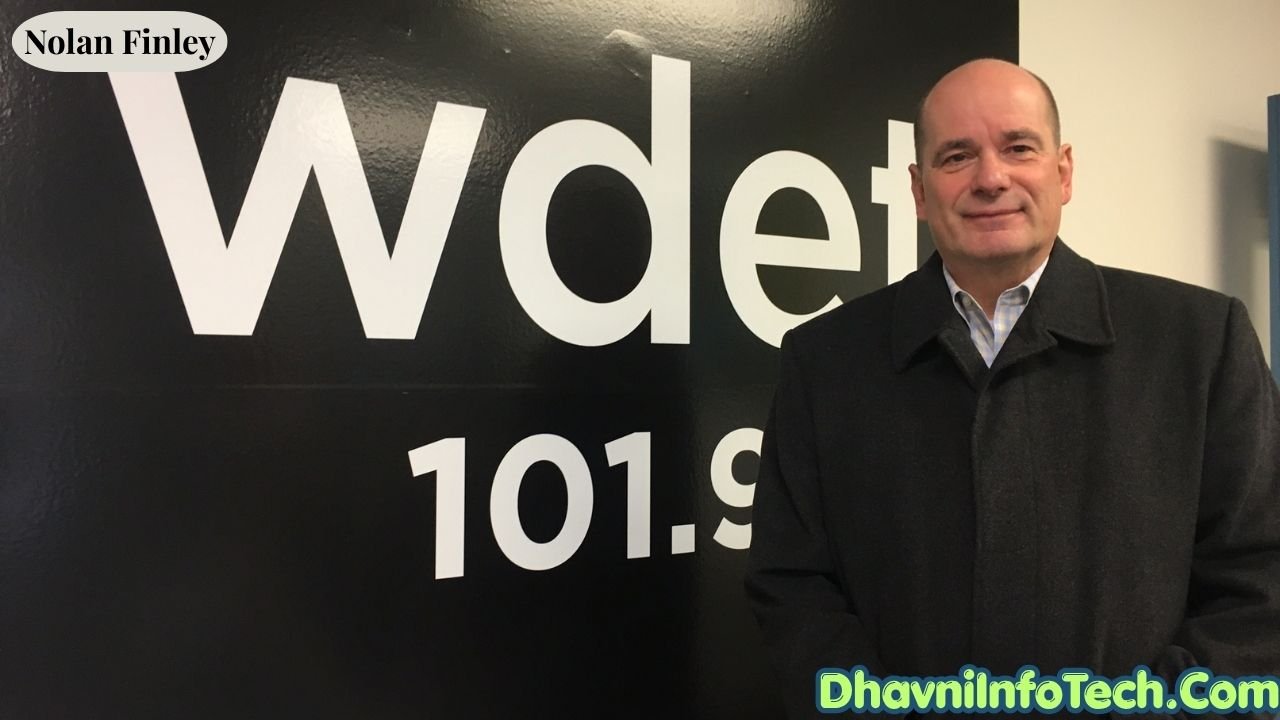
When one of Michigan’s most recognized editorial voices speaks up, people tend to listen — and for good reason. Nolan Finley, the longtime columnist and editorial page editor at the Detroit News, recently published a piece that sent a chill through communities across Metro Detroit and beyond. His message was simple, direct, and deeply unsettling: what happened at Temple Israel in West Bloomfield was not the end. It was a warning shot.
Who Is Nolan Finley?
Before diving into the substance of his editorial, it helps to understand who Nolan Finley is and why his words carry weight in Michigan’s media landscape.
Nolan Finley is a veteran journalist and editorial writer best known for his work at the Detroit News, where he has served as editorial page editor for decades. He is widely regarded as one of Michigan’s most influential conservative voices in print media. Anyone who has looked up Nolan Finley Wikipedia or searched Nolan Finley wiki knows that his career spans more than 30 years of shaping public opinion in the Great Lakes State.
As a writer for the Nolan Finley Detroit News platform, he has never shied away from tackling controversial and uncomfortable topics — and this latest piece is no exception.
The Inciting Event: A Near Tragedy at Temple Israel
On March 21, 2026, Nolan Finley published an editorial in the Detroit News that immediately captured the region’s attention. The piece was a direct response to a terrorist attack on Temple Israel in West Bloomfield — a moment that shook the local Jewish community to its core.
What made the attack especially horrifying was its target. More than 140 school children and their teachers were inside the synagogue’s classrooms when the attack unfolded. By what can only be described as a combination of luck and circumstance, the attack failed to deliver the mass casualties its perpetrators intended.
But Nolan Finley was not willing to let the community exhale and move on. His editorial was a firm and urgent reminder that the absence of death in this instance does not mean the threat has passed. In fact, he argued, it means something far more troubling — the attacks are coming, and communities need to be ready.
Finley’s Core Argument: Iranian-Backed Terrorism Is on the Rise
At the heart of the Nolan Finley Detroit News editorial is a warning about a growing and often under-discussed threat: Iranian-backed terrorism operating on American soil. According to Finley, this isn’t a distant, foreign-policy problem tucked away in Washington briefing rooms. It is local. It is present. And it is escalating.
Expert Voices Back Up the Warning
Nolan Finley didn’t rely solely on his own analysis to make this case. He turned to Matthew Schneider, a former U.S. attorney in Detroit, whose assessment of the situation was nothing short of alarming. Schneider stated plainly that the probability of a significant terrorist attack connected to the Iranian conflict is, in his view, 100%. He made clear that this isn’t limited to some abstract national threat — it includes Michigan, and it includes the communities that many readers call home.
That kind of expert testimony is hard to dismiss. And Nolan Finley, as any follower of Nolan Finley Detroit News coverage knows, is not one to amplify panic without cause. When he cites a former federal prosecutor making that kind of statement, the intention is to inform — not to frighten — and to prompt action rather than paralysis.
The Local Threat: Hezbollah’s Quiet Presence in Metro Detroit
Perhaps the most eye-opening section of Nolan Finley‘s editorial deals with something many Metro Detroit residents may have noticed without fully understanding — the visible presence of Hezbollah fundraising in their own neighborhoods.
Tip Jars “For the Orphans”
Finley drew attention to a striking detail: tip jars labeled “for the orphans” have appeared in stores and gas stations throughout Metro Detroit. According to the editorial, these collections are connected to Hezbollah, a group that the United States government formally designates as a terrorist organization.
This is where the story gets complicated in a way that Nolan Finley does not shy away from addressing. Some people argue that Hezbollah is more than a terrorist group — that it functions as a political party, builds orphanages, and provides social services in the communities it operates in. Finley acknowledges this perspective but makes clear that charitable optics do not erase the group’s designation or its documented history of violence.
For readers who have followed Nolan Finley Detroit News columns over the years, this kind of nuanced-but-firm approach is classic Finley. He presents the complexity, then cuts through it.
From Fundraising to Active Operations: A Dangerous Shift
One of the most significant points in the editorial — and one that deserves particular attention — is the shift Finley describes in Hezbollah’s operational posture within the United States.
For a long time, the group’s American presence was largely focused on fundraising. That activity, while troubling, helped keep violent operations at a lower simmer domestically. The money flowed, but the bombs didn’t. However, Nolan Finley reports that this dynamic has changed in recent months.
Hezbollah, according to the editorial, has moved into a more active operational status on American soil. That transition — from raising money to potentially planning and executing attacks — is exactly the kind of shift that intelligence and law enforcement agencies monitor with the highest level of concern. Finley’s editorial brings this development into the public eye, translating the language of national security into something every Metro Detroit reader can understand and take seriously.
A Call Against Complacency: Don’t Return to Normal
The closing argument of the Nolan Finley Detroit News piece is perhaps its most powerful. It is a direct challenge to the human tendency to normalize tragedy once the immediate shock fades.
After an attack like the one at Temple Israel, there is a natural and understandable desire to declare it an isolated incident, to reassure children and neighbors, and to return to the rhythms of daily life. Nolan Finley understands that impulse — but he refuses to feed it.
His position is clear: treating the West Bloomfield attack as a one-and-done event would be a dangerous mistake. The conditions that produced that attack have not gone away. If anything, they are intensifying. The community must stay alert, stay informed, and resist the comfortable fiction that the worst has already passed.
The Broader Context: Who Normalized the Hate?
Nolan Finley also published a companion editorial around the same time — one that looked at the cultural and political roots of what happened. In that piece, he placed responsibility on those who, in his view, gradually normalized antisemitism in public discourse. The argument ties the local act of violence to a broader, longer-term failure: a failure of voices — political, academic, and cultural — to draw clear and consistent lines against hatred directed at Jewish communities.
It is a perspective consistent with the kind of accountability journalism that readers familiar with Nolan Finley Detroit News editorials have come to expect. For Nolan Finley, the story of terrorism is never just about the perpetrators. It is also about the environments that allow hatred to grow unchallenged.
Final Thoughts
Nolan Finley‘s March 2026 editorial is not comfortable reading — and it was never meant to be. It is the work of a journalist who has spent decades believing that a free press serves its community best when it tells people what they need to hear, not what they want to hear.
Whether you’ve been following Nolan Finley Detroit News coverage for years or came across his name for the first time by searching Nolan Finley Wikipedia or Nolan Finley wiki, this piece stands as a reminder of why local editorial voices still matter. They give shape and urgency to threats that might otherwise stay buried in policy reports and government briefings.
The attack on Temple Israel failed. The next one, Finley warns, may not.
Also Read: The Evolving Identity and Symbolic Presence of patricia carrey fournier